

A Modern Miracle
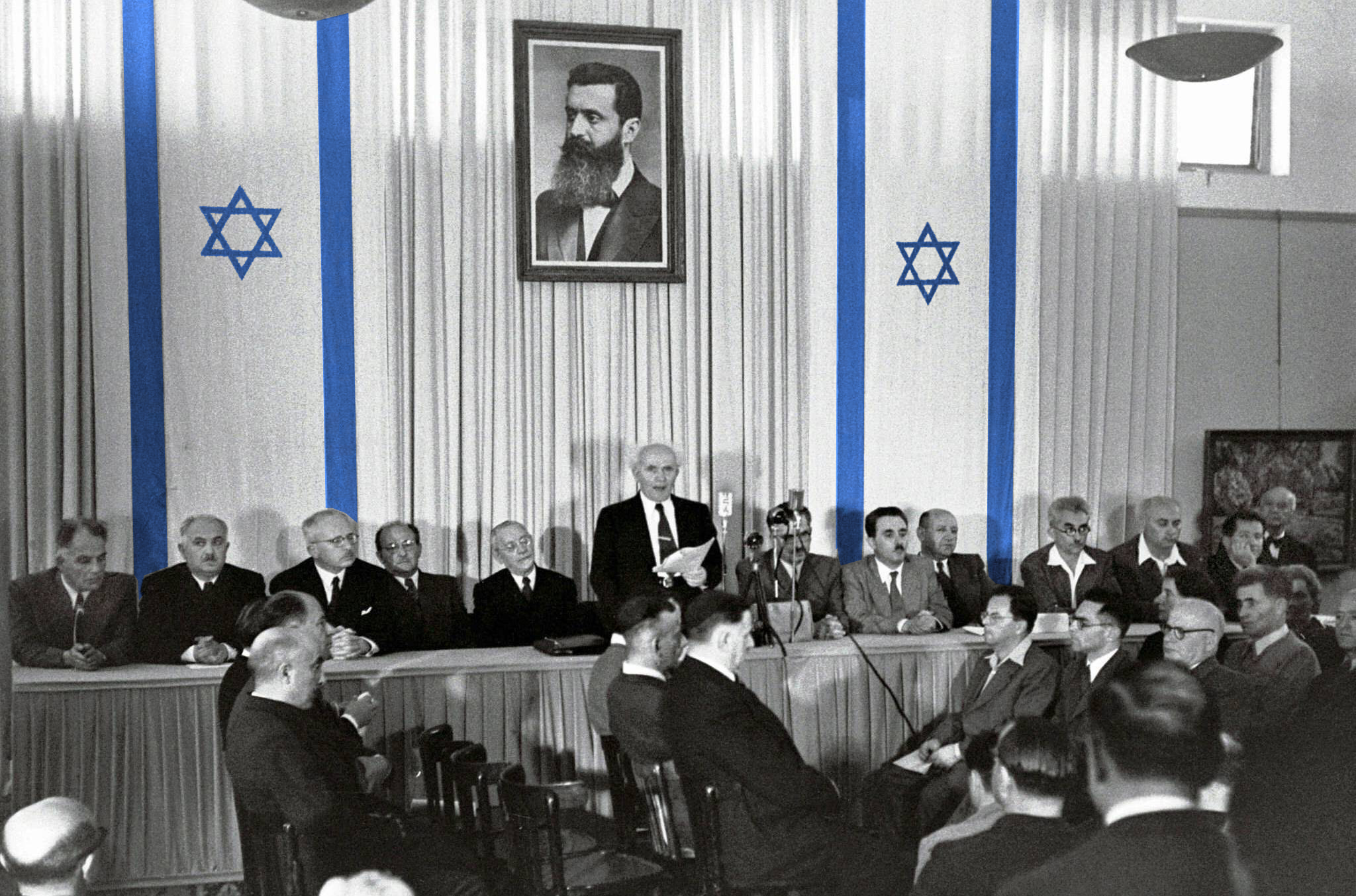
Israel’s Rebirth in 1948: Israel’s rebirth as a modern nation in 1948 stands as one of the most remarkable events in recent history. After centuries of dispersion, hardship, and life under foreign empires, the Jewish people reestablished a sovereign state in the same land promised to their ancestors. This return was not the result of a single political decision but the culmination of a long, complex process involving migrations, settlements, global conflict, and international agreements.
What makes 1948 especially striking is how closely it mirrors themes repeated throughout Scripture. The prophets spoke of a people scattered and later brought back to their land (Isa. 11:11–12; Jer. 31:10). They described a restored homeland, renewed towns, and revived agriculture (Ezek. 36:8–11). While the full picture they envisioned extends beyond the present day, the reestablishment of Israel as a nation aligns with the expectation that God’s purposes for the land and its people continue through history.
The early years of statehood were marked by challenges: waves of immigration, economic strain, and the struggle for survival amid regional conflict. Yet the country grew rapidly, its population expanded, and Hebrew—once primarily a liturgical language—was revived and spoken again in everyday life. Cities developed, agriculture flourished, and archaeological discoveries began shedding new light on the ancient world of the Bible.
For many readers of Scripture, seeing a modern nation in the same location as the biblical one reinforces the continuity of the biblical story. The landscapes where patriarchs walked and prophets spoke are now part of a thriving society with global influence. Travelers today can visit places that were uninhabited or inaccessible for centuries, and they can observe how ancient history and modern life exist side by side.
Israel’s modern restoration does not replace the biblical narrative; it highlights the ongoing relevance of the land in that narrative. It provides a real-world context for studying Scripture, understanding prophecy, and appreciating the historical depth of the Bible. Whether viewed through historical, cultural, or theological lenses, the events of the twentieth century have made it possible once again to study the Bible in the land where it unfolded.
Prophecy, Promise, and Fulfillment: The story of Israel is closely tied to the themes of prophecy, promise, and fulfillment. Throughout the Old Testament, God speaks through the prophets concerning the future of the nation, the land, and the coming Messiah. These prophecies are not vague predictions; they are rooted in God’s earlier promises to Abraham, Isaac, and Jacob, forming a consistent thread that runs through the entire biblical narrative.
Many of these promises find initial fulfillment in Israel’s history—their settlement in the land, the rise of the monarchy, the building of the Temple, and the return from exile all correspond to patterns the prophets described. Other prophecies point forward to events that unfold in the New Testament. The birth of Jesus in Bethlehem (Mic. 5:2), His ministry in Galilee (Isa. 9:1–2), and His redemptive work in Jerusalem all reflect specific expectations laid out centuries earlier.
At the same time, several prophetic themes extend beyond the first century and into the future. The prophets speak of a restored nation, renewed spiritual life, and a time when peace and justice will be established in a lasting way (Isa. 2:2–4; Ezek. 37:21–28). These projections show that God’s promises move through different periods of history, with some elements fulfilled, others unfolding, and others still awaiting completion.
This layered pattern—initial fulfillment, present reality, and future expectation—helps readers understand the continuity of God’s work through time. The consistency between promise and fulfillment underscores the reliability of Scripture and highlights how the events of history align with what the prophets anticipated. It also places modern developments in a broader biblical framework, showing how God’s long-term purposes continue to move forward.
Understanding these themes brings clarity to both the Old and New Testaments and provides a helpful backdrop for exploring the land where many of these promises took shape.
Why Visiting Israel Today is a Remarkable Privilege: Visiting Israel today offers a unique opportunity to experience the world of the Bible in a direct and meaningful way. For many centuries, access to the land was limited by empire, conflict, or geography. Travel was difficult, sites were inaccessible, and much of the landscape remained unexplored. In contrast, the modern State of Israel has made it possible for visitors from around the world to walk the terrain where biblical history unfolded.
Advances in archaeology over the last 150 years have uncovered cities, inscriptions, roads, synagogues, and structures that were hidden for millennia. Sites such as the City of David, Magdala, Caesarea Maritima, and the Pool of Siloam now provide physical evidence that adds depth to the biblical text. Travelers can stand in places that were unknown or unreachable to previous generations, seeing connections between Scripture and the historical record with remarkable clarity.
Modern infrastructure also allows visitors to move quickly between regions described in the Bible. A journey that once required days of walking can now be made in less than an hour. This accessibility makes it easier to understand the relationship between key locations—Jerusalem, Jericho, Galilee, the Jordan Valley, and the Judean wilderness—and to appreciate how geography shapes the biblical narrative.
There is also a historical dimension that makes travel today significant. The continued presence of the Jewish people in their ancestral homeland provides a living link to the world of the Bible. Hebrew, once preserved primarily in Scripture and prayer, is spoken again as a national language. Ancient festivals, customs, and rhythms of life continue alongside modern society, creating a setting where the past and present sit side by side.
For these reasons, visiting Israel offers an educational and historical experience unlike any other. It allows travelers to see the land that forms the backdrop of Scripture, to connect archaeological discoveries with biblical accounts, and to observe firsthand how the themes of the Bible intersect with real places and real history.


