

Caesarea Philippi: The Landscape Behind a Turning Point in the Gospels
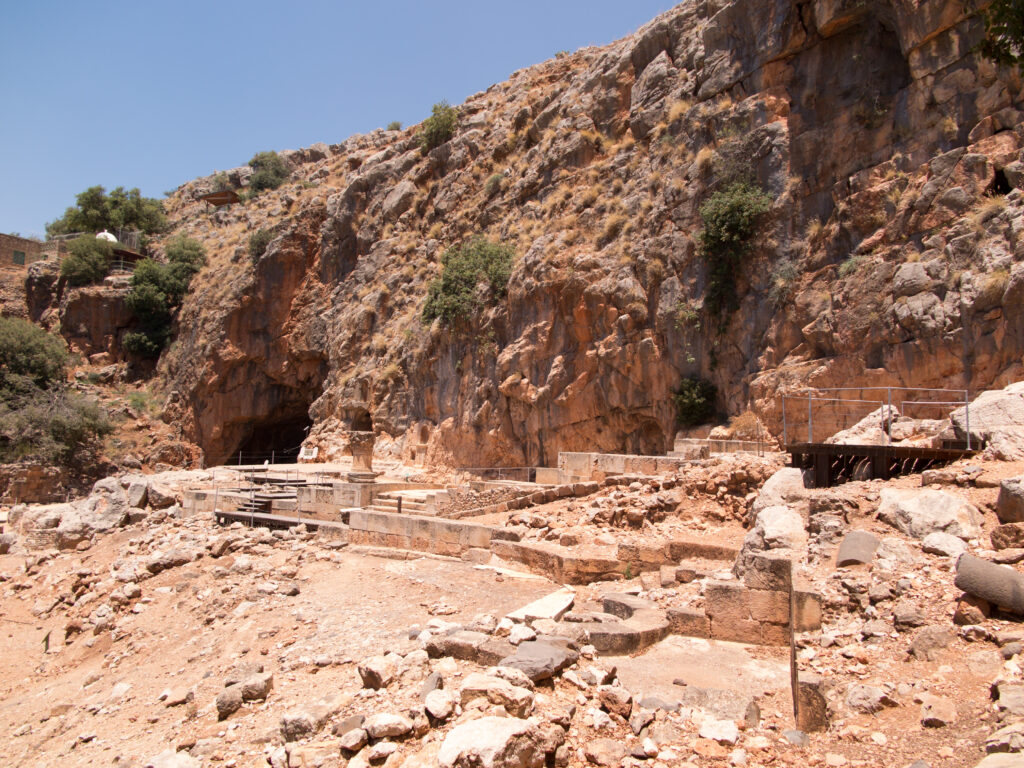
Overview: Caesarea Philippi, located at the base of Mount Hermon, is one of the most visually striking and historically layered sites in northern Israel. Known in antiquity as Paneas (Banias), it developed around a massive rock face and a powerful spring that feeds the Jordan River. The site features a blend of Hellenistic, Roman, and Jewish history, with sanctuaries, courtyards, and palace ruins set within a dramatic natural landscape.
Biblical Significance: Caesarea Philippi is most famous as the place where Jesus asked His disciples, “Who do you say that I am?” and where Peter declared, “You are the Christ, the Son of the living God” (Matthew 16:13–20; Mark 8:27–30). This confession, made in the shadow of pagan shrines and imperial power, highlights the boldness of Peter’s proclamation and the absolute uniqueness of Jesus’ identity.
The enormous rock escarpment at the site gives vivid context to Jesus’ statement, “On this rock I will build My church” (Matthew 16:18). Standing before temples dedicated to Pan, Zeus, and the Roman emperor, Jesus announced a kingdom that would outlast every earthly authority. The contrast between false worship and true revelation becomes unmistakable.
Archaeology & Geography: The site contains some of the most extensive pagan remains in Israel. The Grotto of Pan, a large cave where sacrifices were once offered, anchors the complex. Adjacent niches carved into the rock once held statues of Greek deities. A series of temple foundations—including those of Augustus, Zeus, and Pan—stretch along the cliff, illustrating the city’s role as a major center of Greco-Roman religion.
Archaeologists have uncovered additional structures such as courtyards, ritual areas, and the remains of Herod Philip’s palace. The terrain is dominated by Mount Hermon’s foothills, with cool waters from the Banias Spring forming lush vegetation and feeding one of the Jordan River’s principal sources. This dynamic mix of rock, water, and greenery creates a vivid backdrop for the biblical narrative.
Scripture References:
Matthew 16:13–20
Mark 8:27–30


