

The Old City of Jerusalem: Walking Through the Gates of History and Faith
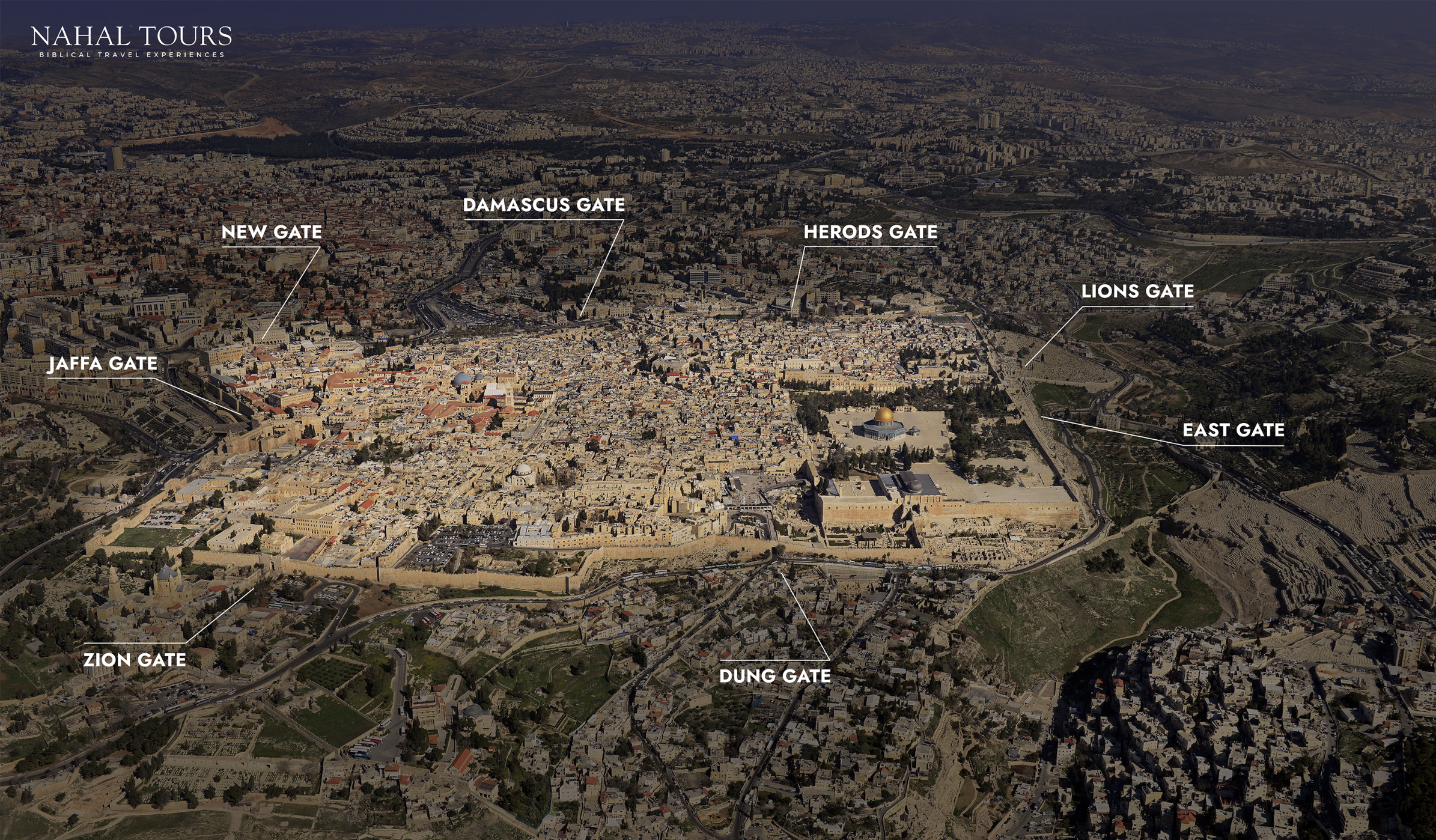
Few places on earth hold the weight of history, faith, and longing quite like the Old City of Jerusalem. Enclosed within ancient stone walls, this compact area—less than one square kilometer in size—contains layers of civilization, conflict, devotion, and promise that span thousands of years. For the Nahal Tours traveler, entering the Old City is not merely stepping into a historic district; it is stepping into the living heart of the biblical story.
The current walls of the Old City were built in the 16th century under the direction of Ottoman Sultan Suleiman the Magnificent, but the ground beneath them bears the imprint of far earlier generations. Within these walls lie sites sacred to Judaism, Christianity, and Islam, including the Western Wall, the Church of the Holy Sepulchre, and the Temple Mount. The city is divided into four quarters—Jewish, Christian, Muslim, and Armenian—each contributing to Jerusalem’s rich and complex identity.
One of the most fascinating features of the Old City is its gates. These are not simply entrances in a wall; they are thresholds through which empires marched, pilgrims wept, merchants traded, and prophets once walked. Each gate carries its own story, reflecting Jerusalem’s role as a crossroads of the world.
Approaching from the west, many visitors first enter through Jaffa Gate, historically the gateway for pilgrims arriving from the Mediterranean coast. For centuries, travelers would land at the port of Jaffa and make the uphill journey to Jerusalem, passing through this gate to reach the holy city. Today, Jaffa Gate remains one of the busiest entrances, linking the Old City to modern Jerusalem and opening into the Christian and Armenian Quarters. Its constant movement mirrors Jerusalem itself—ancient and modern, sacred and everyday, intertwined.
To the south stands Zion Gate, sometimes called David’s Gate. It provides access to Mount Zion, traditionally associated with King David, and to sites connected with the Last Supper. The gate still bears visible bullet scars from the 1948 Arab-Israeli War, a sobering reminder that Jerusalem’s history is not confined to the distant past. Scripture speaks often of Zion as the dwelling place of God’s presence, a theme that echoes strongly as one passes through this weathered entrance.
“Great is the Lord, and greatly to be praised
In the city of our God,
In His holy mountain.”
— Psalm 48:1 (NKJV)
Nearby is the Dung Gate, the closest entrance to the Western Wall. Its name recalls ancient times when refuse was carried out of the city through this area, but today it serves as one of the primary access points for Jewish worshippers. Walking through this gate toward the stones of the Western Wall, travelers witness prayers whispered, tears shed, and promises remembered—an enduring expression of Israel’s covenant relationship with God.
On the eastern wall lies the Golden Gate, also known as the Gate of Mercy. Unlike the other gates, it is sealed shut. According to Jewish tradition, the Messiah will one day enter Jerusalem through this gate, coming from the Mount of Olives directly opposite it. For Christians, the eastern approach holds deep resonance with biblical prophecy and the life of Jesus. The sealed stones quietly proclaim expectation, reminding visitors that Jerusalem is a city oriented not only toward the past, but toward what is yet to come.
Then there is Lion’s Gate, sometimes called St. Stephen’s Gate, which opens into the Muslim Quarter. This gate marks the beginning of the Via Dolorosa, the path traditionally associated with Jesus’ walk to His crucifixion. Passing through Lion’s Gate, one enters the narrative of Christ’s suffering, obedience, and sacrifice.
“And He, bearing His cross, went out to a place called the Place of a Skull, which is called in Hebrew, Golgotha.”
— John 19:17 (NKJV)
On the northern wall is Herod’s Gate, also known as the Gate of Flowers. Smaller and quieter than some of the others, it reminds visitors that not every entrance into Jerusalem was grand. Yet even this modest gate played a role in the daily life of the city, leading into the Muslim Quarter and reflecting the layered rule of empires that once claimed Jerusalem as their own.
Dominating the northern approach is Damascus Gate, the most ornate and imposing of all the gates. This was the main route north toward Samaria, Damascus, and beyond. Today it opens into one of the liveliest markets in the Old City, filled with sound, color, and movement. It is a powerful reminder that Jerusalem has always been a place where cultures meet and collide.

The final and most recent addition is the New Gate, constructed in the late 19th century to provide easier access to Christian institutions outside the walls. Though younger than the others, it underscores an important truth: Jerusalem continues to adapt and grow, even as it remains anchored in its ancient foundations.
As you walk through these gates, you are not simply entering a city—you are passing through centuries of faith, longing, judgment, and hope. Kings, prophets, apostles, crusaders, and everyday believers have crossed these same thresholds. The stones beneath your feet have heard prayers in countless languages, yet the God to whom those prayers were offered remains unchanged.
“Pray for the peace of Jerusalem:
‘May they prosper who love you.’”
— Psalm 122:6 (NKJV)
For the Nahal Tours traveler, the Old City of Jerusalem is not just a destination. It is an encounter. Each gate invites reflection on where we have come from, what we believe, and where history is ultimately headed. To walk through them is to step into the story of God’s redemptive work—a story still unfolding today.


